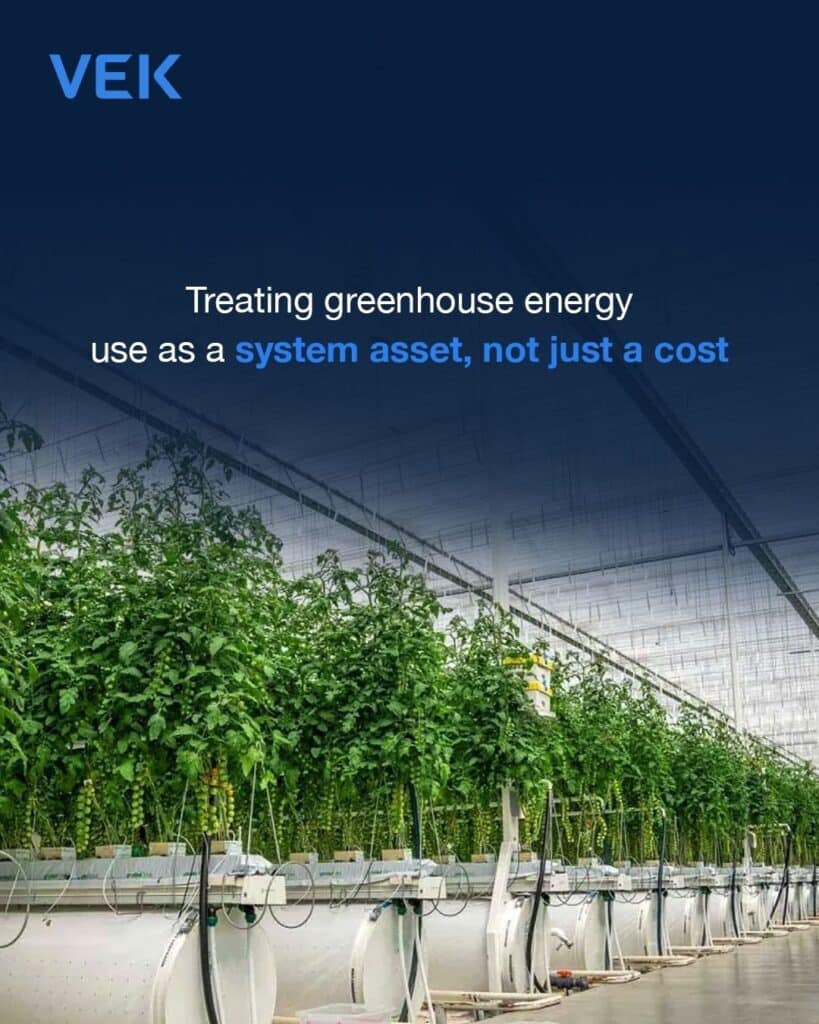
LinkedIn post 13-01-2026
𝗙𝗿𝗼𝗺 𝗘𝗻𝗲𝗿𝗴𝘆 𝗖𝗼𝗻𝘀𝘂𝗺𝗲𝗿 𝘁𝗼 𝗘𝗻𝗲𝗿𝗴𝘆 𝗔𝘀𝘀𝗲𝘁 𝗶𝗻 𝗚𝗿𝗲𝗲𝗻𝗵𝗼𝘂𝘀𝗲 𝗗𝗲𝘀𝗶𝗴𝗻
Electricity demand in greenhouse and controlled-environment agriculture is rising, driven by lighting, cooling and storage.
At the same time, recent work on renewables in agriculture shows that these facilities can also play a role in more flexible, distributed energy systems — when they are planned with that function in mind.
For VEK, the question is not only how to make greenhouses more energy-efficient, but when and how they can be designed as flexible loads or even as energy assets within regional energy systems.
In practice, this means bringing energy to the centre of the design brief:
𝗗𝗲𝗺𝗮𝗻𝗱 𝗽𝗮𝘁𝘁𝗲𝗿𝗻𝘀 – mapping heat, power and cooling needs over time, rather than relying on static annual figures.
𝗦𝘂𝗽𝗽𝗹𝘆 𝗼𝗽𝘁𝗶𝗼𝗻𝘀 – assessing on-site and near-site sources such as solar PV, geothermal links, waste heat or shared energy infrastructure.
𝗙𝗹𝗲𝘅𝗶𝗯𝗶𝗹𝗶𝘁𝘆 – analysing how demand can be shifted, limited or stored in response to grid conditions, tariffs and capacity constraints.
𝗦𝘆𝘀𝘁𝗲𝗺 𝗶𝗻𝘁𝗲𝗴𝗿𝗮𝘁𝗶𝗼𝗻 – ensuring energy design, greenhouse systems and operational strategy are treated as one architecture, not as separate decisions.
As climate and energy pressures tighten, projects that focus only on reducing consumption risk missing part of the opportunity.
Facilities designed with energy systems in mind can contribute to more stable local grids while improving their own long-term operating position.
VEK’s approach links energy strategy, technical design and system operation from the outset, treating each facility as part of both a food system and an evolving energy system.