
LinkedIn post 3-1-2026
𝗕𝗮𝘁𝘁𝗲𝗿𝘆 𝗦𝘁𝗼𝗿𝗮𝗴𝗲 𝗳𝗼𝗿 𝗚𝗿𝗼𝘄𝗲𝗿𝘀: 𝗔𝗽𝗽𝗿𝗼𝘃𝗮𝗹𝘀, 𝗗𝗲𝘀𝗶𝗴𝗻 𝗮𝗻𝗱 𝗣𝗿𝗮𝗰𝘁𝗶𝗰𝗮𝗹 𝗨𝘀𝗲
More growers are exploring battery storage as energy conditions continue to change. Grow lights increasingly operate at night and during low-light periods, power is supplied through a mix of grid electricity and on-site CHP, and in some cases supplemented by PV installations on roofs or water basins.
At the same time, grid congestion is limiting the capacity that can be fed into or drawn from existing connections.
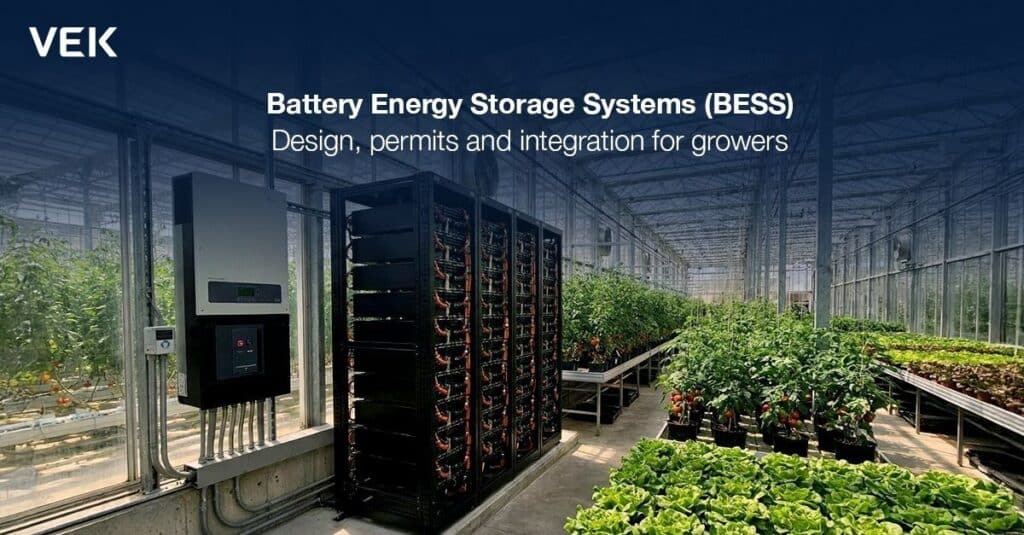
A 𝗕𝗮𝘁𝘁𝗲𝗿𝘆 𝗘𝗻𝗲𝗿𝗴𝘆 𝗦𝘁𝗼𝗿𝗮𝗴𝗲 𝗦𝘆𝘀𝘁𝗲𝗺 (𝗕𝗘𝗦𝗦) can help manage this complexity by storing electricity when it is available and deploying it when demand is highest.
Used correctly, storage can reduce peak loads on grid connections and create greater flexibility in how CHP, grid power and PV generation are combined.
From a regulatory perspective, authorities are increasingly recognising BESS as a tool to support local network stability, provided systems meet defined technical, safety and environmental requirements.
VEK supports growers in taking battery storage projects from early concept through to implementation. This includes coordinating planning, environmental and safety approvals, designing the integration of storage with existing CHP, PV and greenhouse systems, and sizing capacity based on the actual consumption profile of the operation.
By treating battery storage as part of the overall energy system, rather than a standalone add-on, storage can become a practical instrument for improving energy control while remaining aligned with grid constraints and regulatory frameworks.