LinkedIn post 16-12-2025
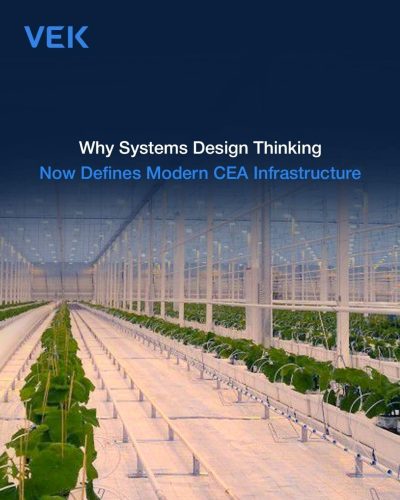
𝗪𝗵𝘆 𝗦𝘆𝘀𝘁𝗲𝗺𝘀 𝗗𝗲𝘀𝗶𝗴𝗻 𝗧𝗵𝗶𝗻𝗸𝗶𝗻𝗴 𝗡𝗼𝘄 𝗗𝗲𝗳𝗶𝗻𝗲𝘀 𝗠𝗼𝗱𝗲𝗿𝗻 𝗖𝗘𝗔 𝗜𝗻𝗳𝗿𝗮𝘀𝘁𝗿𝘂𝗰𝘁𝘂𝗿𝗲
Systems-level thinking sits at the centre of how VEK approaches greenhouse and controlled-environment agriculture.
As projects grow more complex, the real question is no longer which structure to choose or which technology to install, it is how the entire system will behave, interact and remain stable over time.
In practice, systems design thinking requires treating every component as part of one architecture:
• 𝗖𝗹𝗶𝗺𝗮𝘁𝗲 𝗮𝗻𝗱 𝗲𝗰𝗼𝗹𝗼𝗴𝘆 – using local climate, water availability, energy realities and ecological constraints as non-negotiable design parameters.
• 𝗣𝗼𝗹𝗶𝗰𝘆 𝗮𝗻𝗱 𝗿𝗶𝘀𝗸 – translating regulatory, sustainability and energy frameworks into boundaries that shape technical choices and operational models.
• 𝗦𝘆𝘀𝘁𝗲𝗺 𝗮𝗿𝗰𝗵𝗶𝘁𝗲𝗰𝘁𝘂𝗿𝗲 – aligning layouts, mechanical systems, climate control and resource flows so production, energy use and resilience are governed as one integrated system.
• 𝗠𝗮𝗿𝗸𝗲𝘁 𝗮𝗹𝗶𝗴𝗻𝗺𝗲𝗻𝘁 – connecting capacity, quality, reliability and operating cost to real offtake conditions and long-term commercial viability.
As controlled-environment agriculture scales, projects that treat these elements separately will struggle under tighter climate, energy and reporting pressures.
The gap between isolated design decisions and whole-system performance is widening.
VEK’s systems design framework brings these strands together from the outset, creating climate-adaptive agricultural infrastructure engineered for predictable, long-term performance.